Mapping Sequence Triggers in Cascade Systems for Mobile Casino Games Under British Licensing Standards
Bianca Weber · Oct 17, 2026

Mapping Sequence Triggers in Cascade Systems for Mobile Casino Games Under British Licensing Standards
Developers track sequence triggers in cascade mechanics by logging each reel tumble that removes winning symbols and drops new ones into place, and this process repeats until no further matches form on handheld casino platforms. British licensing standards require clear documentation of these chains because operators must demonstrate that every outcome remains random and verifiable during audits.
Sequence triggers activate when specific patterns align after an initial spin, such as consecutive cascades reaching a set threshold that unlocks bonus rounds or multiplier increases. Observers note that mobile platforms handle these calculations through optimized code that maintains performance on smaller screens while preserving the same probability structures used on desktop versions.
How Cascade Chains Operate on Portable Devices
Each cascade begins with a base spin that evaluates symbol matches according to the game's paytable, after which winning combinations disappear and symbols above fall into the gaps. Researchers have documented that trigger points often depend on the number of consecutive cascades, the total symbols removed, or the appearance of special wilds during the sequence. Handheld devices run these sequences through lightweight engines that reduce latency, and data from platform tests shows average chain lengths remain consistent across screen sizes.
One study revealed that developers calibrate trigger thresholds to balance game pace with regulatory requirements for transparency. Figures indicate that mobile sessions frequently feature shorter individual cascades compared with larger screens, yet the overall distribution of outcomes stays aligned because random number generators function independently of display format.
Regulatory Requirements for Trigger Documentation
British rules mandate that all sequence triggers undergo third-party testing before deployment, and this includes verification that no hidden patterns favor the operator. Licensing bodies examine source code and simulation data to confirm that cascade mechanics produce results within declared return-to-player ranges across thousands of simulated plays. External reports from the Pennsylvania Gaming Control Board provide comparative benchmarks showing how similar cascade systems meet fairness criteria in other jurisdictions.
Operators must publish clear descriptions of how triggers activate bonuses or multipliers, and this information appears in game rules accessible directly from the mobile interface. Compliance teams review session logs to ensure that every cascade sequence matches the certified random outcomes, and any deviation triggers an immediate investigation.
Technical Implementation Across Handheld Platforms
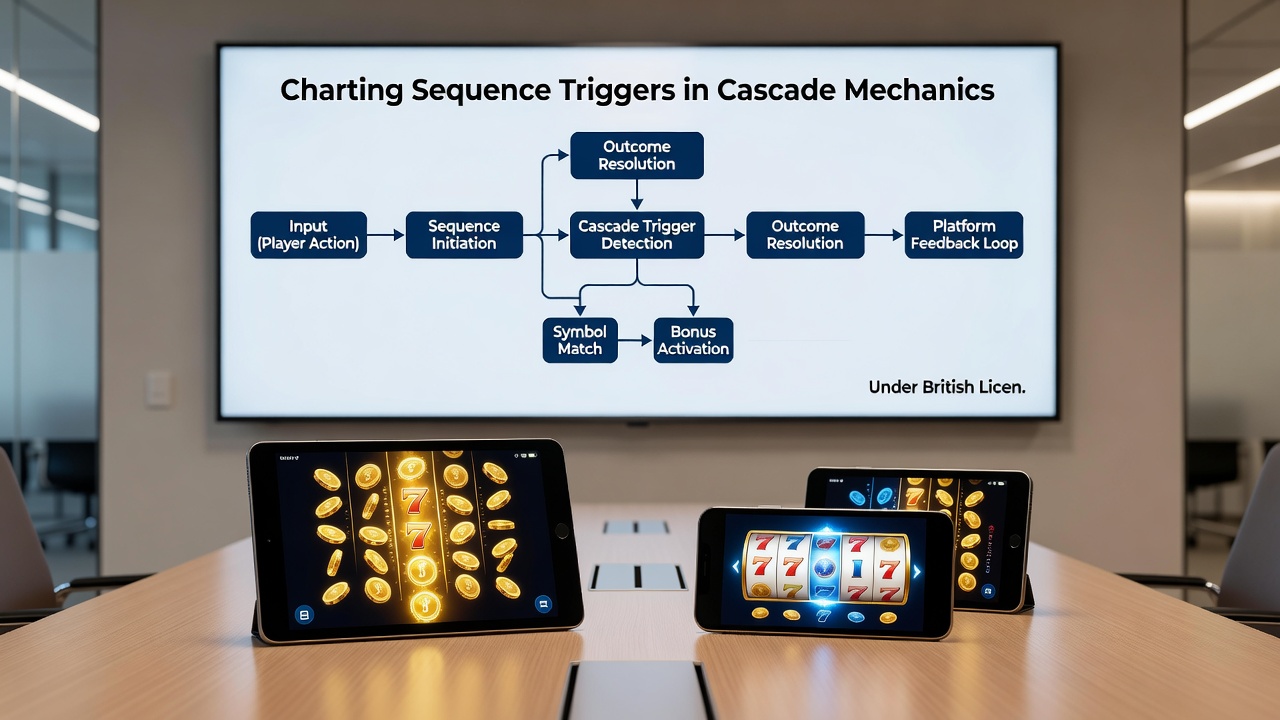
Programmers integrate sequence detection algorithms that monitor symbol positions after each tumble, and these routines flag when a predefined trigger condition occurs. Mobile operating systems impose memory and processing limits, so developers optimize the code by pre-calculating likely chain outcomes during initial loads. Evidence suggests that efficient implementations reduce battery drain while preserving exact trigger probabilities required under licensing terms.
Testing protocols in October 2026 incorporated updated mobile hardware profiles to verify that newer devices handle extended cascade sequences without frame drops or calculation errors. Industry associations such as the International Association of Gaming Regulators have published guidelines that encourage standardized logging formats for sequence data across different regions.
Player Interface Considerations and Compliance
Handheld casino interfaces display ongoing cascade progress through animated counters and highlighted trigger zones, and these visual cues must match the underlying certified mechanics exactly. Developers include optional pause functions during long sequences so users can review results without affecting the outcome. Licensing conditions require that all displayed information remains accurate and that no visual effects imply greater control than the random system actually provides.
Session data collected from compliant platforms shows that players encounter sequence triggers at rates consistent with published game mathematics. Regular audits compare live mobile logs against certification records to detect any drift introduced by software updates or device-specific optimizations.
Conclusion
Sequence triggers in cascade mechanics represent a core element of modern mobile slot design, and British licensing rules establish precise requirements for their documentation, testing, and display. Continued refinement of these systems through October 2026 and beyond relies on consistent regulatory oversight combined with technical improvements that maintain fairness across handheld platforms.